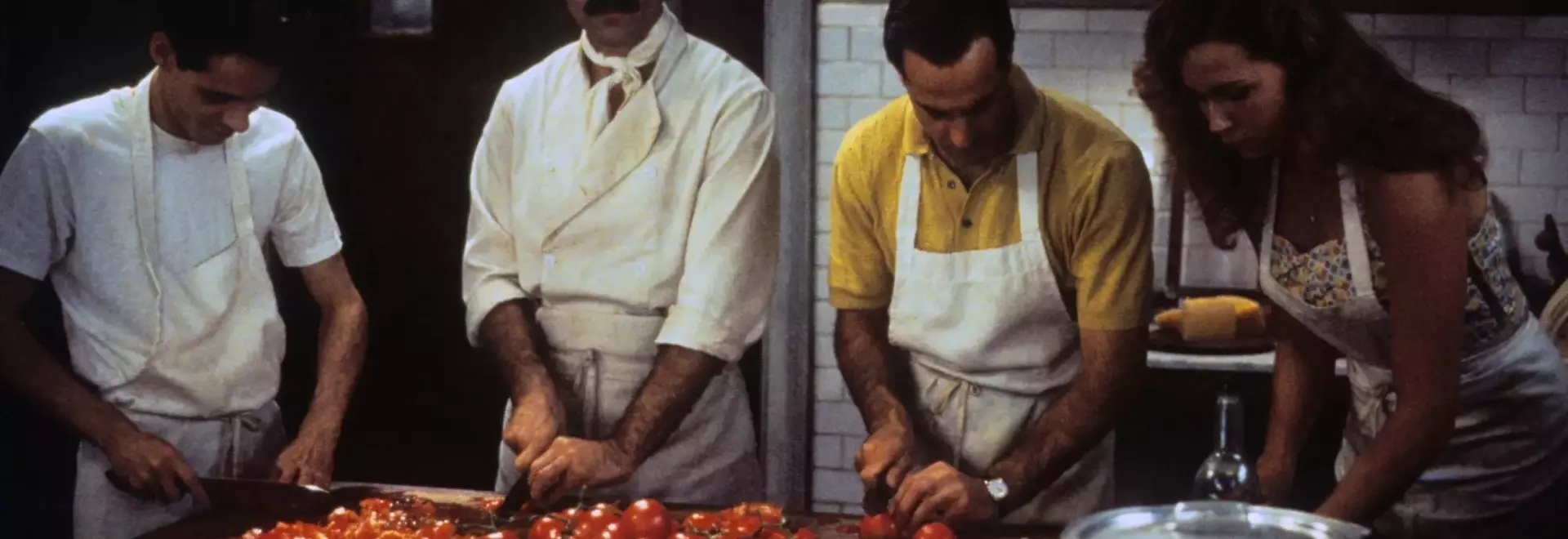
A Culinary Brotherly Bond: Revisiting 'Big Night'
Twenty-eight years after its debut, the film 'Big Night' continues to resonate as a touching exploration of fraternal bonds, culinary integrity, and the challenges of cultural assimilation. Released in 1996, this cinematic gem, co-written and co-directed by Stanley Tucci, along with co-star Tony Shalhoub, presents a narrative rich in emotional depth and nuanced character portrayals. It highlights the struggles of two Italian-American brothers striving to preserve their authentic culinary vision amidst the commercial pressures of 1950s America. The movie's enduring appeal lies in its ability to blend humor and poignancy, capturing the universal tension between artistic purity and commercial viability, all while celebrating the profound connection between family members.
The critical and modest commercial success of 'Big Night' underscores its timeless themes. It's a film that eschews superficial humor, opting instead for a subtle, character-driven approach that allows the audience to fully immerse themselves in the brothers' world. The performances, particularly from Tucci and Shalhoub, are lauded for their sincerity and depth, bringing a genuine humanity to their roles. The story skillfully navigates their professional and personal challenges, culminating in a memorable final scene that wordlessly reaffirms their unbreakable bond, solidifying the film's status as a beloved classic that continues to charm and move viewers with its heartfelt storytelling and meticulous attention to detail.
The Brothers' Culinary Quest and Personal Struggles
The 1996 cinematic release 'Big Night' chronicles the arduous journey of Primo and Secondo, two Italian immigrant siblings, as they endeavor to establish a thriving authentic Italian dining establishment on the New Jersey coastline during the 1950s. Despite Primo's extraordinary culinary artistry and Secondo's astute business acumen, their unwavering commitment to uncompromised gastronomic perfection often clashes with customer expectations, leading to financial difficulties for their restaurant, Paradise. A particularly telling incident involves Primo's intense reaction when a patron requests a side of spaghetti with his meticulously prepared risotto, underscoring his refusal to dilute his culinary vision. This conflict drives much of the film's narrative, illustrating the brothers' struggle to balance their artistic integrity with the practical demands of their enterprise.
Amidst their professional challenges, the narrative skillfully weaves in the complex romantic entanglements of both brothers. Secondo finds himself navigating a relationship with a kind-hearted American woman, Minnie Driver's character, while simultaneously engaging in a clandestine affair with Pascal's Italian associate, portrayed by Isabella Rossellini. Meanwhile, the reserved Primo harbors a quiet affection for the florist, played by Allison Janney, who supplies flowers for their restaurant, yet struggles with expressing his feelings. These personal relationships add layers of depth to the story, complicating their lives and intensifying the emotional stakes as they prepare for a pivotal "big night," an event designed to salvage their restaurant by attracting the attention of famous singer Louis Prima, through the machinations of their rival, Pascal. The intertwining of their culinary dreams and their intimate lives forms the core of this poignant and often humorous narrative.
Balancing Authenticity with Ambition
The film 'Big Night' masterfully explores the intricate balance between artistic integrity and commercial success, a theme central to the struggles of Primo and Secondo. Primo, the culinary genius, steadfastly refuses to compromise his traditional Italian cuisine, believing that true artistry lies in unadulterated perfection. This unwavering commitment, while admirable, creates friction with Secondo's more pragmatic approach, who observes the thriving, less authentic establishment of Pascal with a mix of envy and frustration. Secondo understands the need to adapt to customer preferences to ensure their restaurant's survival, creating a poignant dilemma that drives much of the narrative tension. Their conflict highlights the universal struggle faced by many artists and entrepreneurs who must decide whether to uphold their vision or yield to market demands.
The climax of the story, the "big night" feast orchestrated to impress Louis Prima, becomes a crucible for these tensions. It is a desperate attempt to gain recognition and financial stability without sacrificing their deeply held culinary principles. This event, however, does more than just showcase their culinary talents; it exposes the raw emotions and deep-seated conflicts that simmer beneath the surface of their relationship. As the evening unfolds, long-held truths are revealed, wounds are opened, and both their professional and romantic lives reach critical junctures. Despite the unfolding drama and the potential for their dreams to crumble, the film ultimately underscores the resilience of their fraternal bond. The quiet, profoundly moving final scene wordlessly reinforces that, regardless of external outcomes, the connection between Primo and Secondo remains unbroken, a testament to the enduring strength of family amidst life's inevitable compromises and challenges.