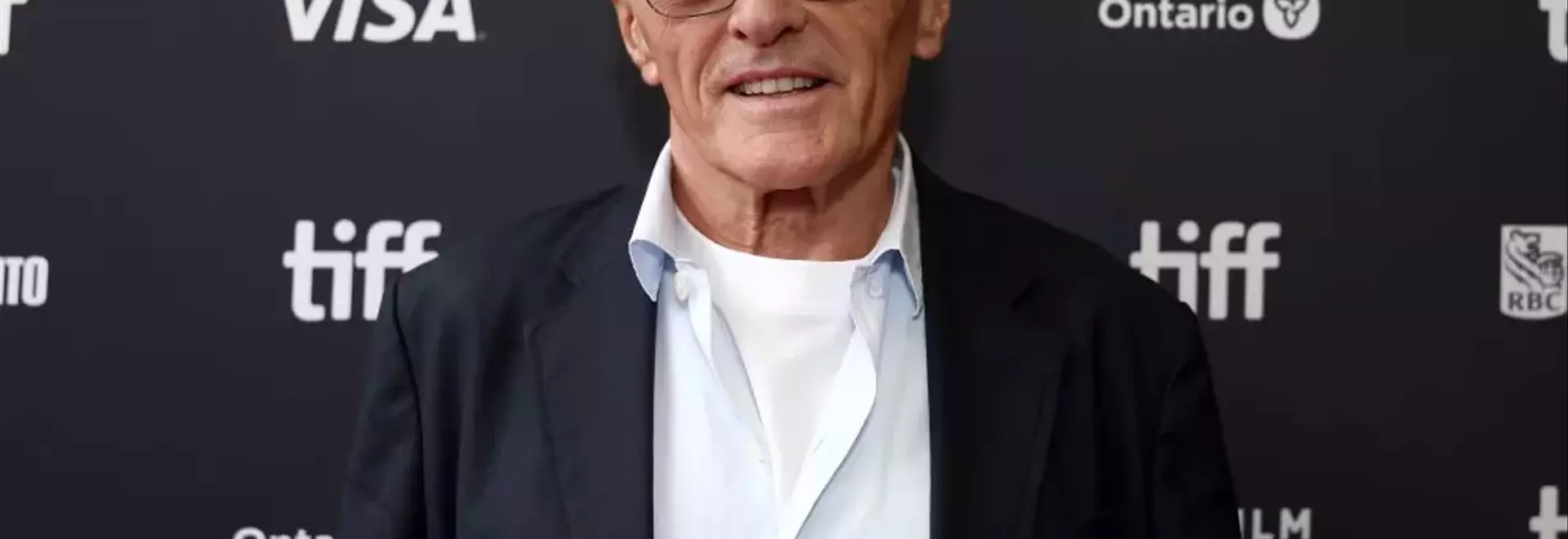
Danny Boyle Avoids AI Discussion for 'Ink' at TIFF
At the Toronto International Film Festival, acclaimed director Danny Boyle's latest feature, 'Ink,' made its Canadian debut. The film delves into the sensational rise of the U.K.'s 'The Sun' tabloid, depicting its transformation under Rupert Murdoch's ownership and editor Larry Lamb's guidance into a mass-market phenomenon, trading hard news for scandalous headlines and popular appeal. During the post-screening Q&A, Boyle briefly touched upon the integration of artificial intelligence in his film, clarifying its limited application to visual effects, such as animating archival images and generating computer-animated mice for newsroom scenes. He emphasized a responsible approach, ensuring no actors were displaced due to AI use. However, when pressed on the wider societal and industry impact of AI, Boyle deferred a detailed discussion, signaling it as a complex subject requiring deeper engagement at a later juncture. The film itself has garnered considerable attention for its vibrant portrayal of tabloid journalism and standout performances from its lead actors, Guy Pearce and Jack O'Connell, who bring nuanced interpretations to their roles as Murdoch and Lamb, respectively.
Director Danny Boyle Navigates AI Queries at Toronto Film Festival's 'Ink' Premiere
On Tuesday afternoon, September 15, 2026, at the prestigious Princess of Wales Theatre in Toronto, Ontario, the Toronto International Film Festival (TIFF) hosted the Canadian premiere of Danny Boyle's much-anticipated film, 'Ink.' Following the screening, during a lively Q&A session, Boyle, accompanied by the film's stars Jack O'Connell and Guy Pearce, addressed a range of questions from the audience. A particularly pressing query arose regarding the film's utilization of artificial intelligence and its broader implications for the cinematic landscape.
Boyle acknowledged employing a 'tiny amount' of AI, specifically 'about thirty seconds' to animate historical photographs and to create computer-generated mice that scurry through the newsroom setting. He meticulously clarified that this AI integration was primarily a tool within the visual effects (VFX) pipeline, reassuring attendees that 'we try to be very responsible and make sure no actors were out of work because of it.' The Oscar-winning director, known for his dynamic storytelling, opted to defer an extensive discussion on AI's overarching impact, stating, 'The why of it… is a hugely complicated [question], which I don’t think we’ll need to go into here.' The moderator concluded the session shortly thereafter, leaving the broader AI debate for another occasion.
Earlier in the discussion, O'Connell and Pearce shared insights into their meticulous preparation for portraying the larger-than-life figures of Larry Lamb and Rupert Murdoch. Boyle drew a personal connection to Lamb, noting his own experience as an 'outsider coming to London' from Lancashire, much like the Yorkshire-born editor. Pearce, in his research of Murdoch, discovered a more 'shy' and 'humble' individual in early footage, challenging the commonly held perception of the media mogul as a 'monster.' He observed a quiet ambition that shaped the man who would later exert significant global influence.
Boyle's cautious approach to discussing AI at TIFF reflects a broader industry sentiment—a growing awareness of AI's potential while grappling with its ethical and practical ramifications. His willingness to acknowledge AI's limited use in 'Ink' with transparency, coupled with his commitment to protecting human talent, sets a commendable precedent. Yet, his evasion of deeper debate signals that the film world is still navigating the complexities of this nascent technology. It highlights a critical juncture where innovation meets responsibility, and while AI offers new creative avenues, the industry is rightly treading carefully, prioritizing human artistry and employment. This incident serves as a subtle reminder that while technology advances rapidly, the human element in storytelling remains paramount, and significant conversations about its future are still on the horizon.