Ford Transit Trail Owners May Receive Compensation for Tire Clearance Issues
Cars

Ford Transit Trail Owners May Receive Compensation for Tire Clearance Issues

authorBy Larry Chen
DateOct 31, 2026
Read Time3 min
This article outlines a significant legal development concerning a popular adventure vehicle, detailing a class-action settlement and its implications for owners.

Ford Acknowledges Design Flaw, Offers Reparation for Off-Road Van Purchasers

Legal Action Initiated Due to Design Flaw in Off-Road Vehicle Package

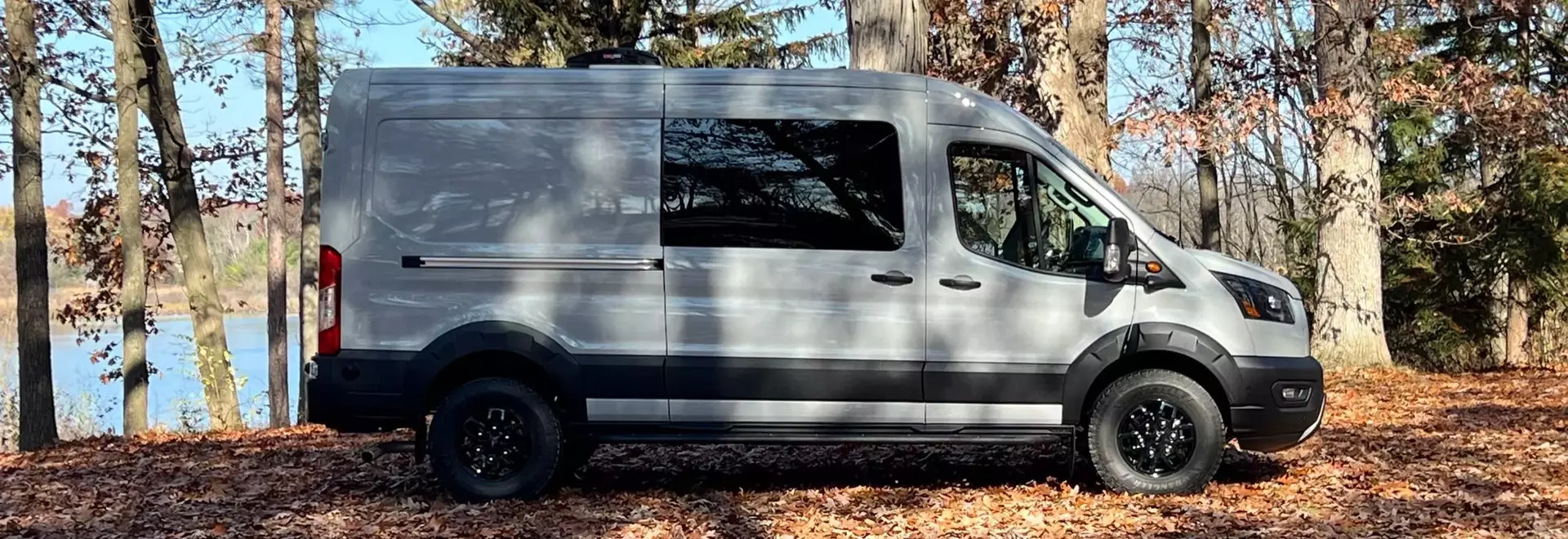
The Ford Transit, particularly its Trail variant, was marketed as an ideal recreational vehicle for outdoor enthusiasts. This trim included specialized features such as elevated suspension, a wider track, and protective elements, presenting it as a robust option for navigating rugged terrains. However, a critical oversight emerged: the generously sized 30.5-inch all-terrain tires, despite the vehicle's enhanced ground clearance, frequently made contact with the wheel wells under specific operational scenarios.

Automaker Agrees to Substantial Reimbursement per Affected Customer

A class-action lawsuit highlighted the deficiency in the Ford "Transit Trail"'s design, specifically pointing out inadequate clearance between the wheels and tires within the vehicle's wheel wells. Under diverse driving conditions—including turning, braking, or when the van was fully loaded with passengers or gear—the 30.5-inch all-terrain tires were prone to rubbing against the fender liners. This design flaw was even recognized by the National Highway Traffic Safety Administration (NHTSA), leading to a recall in March 2024 due to what was termed "insufficient packaging allowance" for the front tires. Ford has since agreed to a settlement, acknowledging their error.

Criteria for Participation in the Compensation Program

Individuals who qualify for this settlement are primarily original purchasers or lessees of the Ford Transit Trail. To be eligible, the vehicle must have been acquired from an authorized Ford dealership or a recognized upfitter or intermediary that initially bought the vehicle for resale or modification. Regrettably, those who obtained a pre-owned Ford Transit Trail are not covered by this agreement, nor are individuals who have previously filed separate legal actions against Ford for the same defect. Nevertheless, original owners or lessees who purchased or leased a Ford Transit Trail before June 1, 2024, but no longer possess the vehicle, may still be included in the class settlement.

Process for Submitting Claims and Receiving Compensation

Qualifying members of the settlement class who submit a duly completed and verified claim form, along with appropriate documentation proving ownership or lease, are entitled to receive a payment of $6,000 per vehicle. This sum represents nearly half the cost of the original Trail package, offering a significant contribution towards potential modifications to rectify the tire clearance issues. Claims must be processed via the designated settlement website, with all necessary information and documents submitted by January 15, 2027. Payments will be disbursed by check following the court's final approval of the Ford Transit Trail class-action settlement, scheduled for a hearing on March 16, 2027. Disbursement of settlement funds will occur once all approvals and any potential appeals have been concluded.

More Articles
Cars
Mazda Ceases Skyactiv-X Engine Production for Mazda3, Shifts Focus to Hybrids
Mazda is discontinuing its innovative Skyactiv-X engine from the 2027 Mazda3 lineup, signaling a strategic shift towards hybrid technology and the forthcoming Skyactiv-Z architecture. This move impacts the European market, where the Mazda3 will now exclusively offer the 2.5-liter e-Skyactiv G engine. Despite its advanced engineering, the Skyactiv-X never launched in the U.S. due to consumer preference for horsepower over fuel efficiency. The automaker is now prioritizing hybridization, especially in its SUV segment, to drive sales growth.
By Simona De SilvestroOct 31, 2026
Cars
Analyzing the Value of the 2026 Ford Explorer Tremor: A Week-Long Review
This article evaluates the 2026 Ford Explorer Tremor, focusing on whether its $64,225 price tag, including $14,200 in optional packages, justifies the investment. It delves into the vehicle's off-road capabilities, powerful engine, and luxury interior features. The review also compares the Tremor to its competitors and discusses the practical considerations for families, particularly regarding seating capacity. The author questions the value of high-cost options versus the well-priced base model.
By Brock YatesOct 31, 2026
Cars
2026 Mercedes-AMG E 53 Hybrid Wagon: Disappointments Behind the Wheel
The 2026 Mercedes-AMG E 53 Hybrid Wagon, a high-performance vehicle, offers 577 horsepower and an impressive 41-mile electric range, making it a formidable contender against rivals like the BMW M5 Touring and Audi RS 6 Avant Performance. However, despite its powerful performance and luxurious interior, the author highlights several significant drawbacks that detract from its overall appeal, particularly for daily use and family practicality.
By Jeremy ClarksonOct 31, 2026
Cars
The 2028 Subaru Getaway 3-Row EV: A Worthy Successor to the Ascent?
The upcoming 2028 Subaru Getaway electric SUV promises a significant upgrade over the current Ascent, offering enhanced performance with 420 horsepower, standard all-wheel drive, and an extended range exceeding 300 miles. Its family-oriented interior provides more cargo space and improved third-row comfort. However, the Getaway comes with a higher price tag and reduced towing capacity, making the Ascent a more suitable option for budget-conscious buyers or those needing to tow heavier loads.
By Jeremy ClarksonOct 31, 2026
Cars
2027 BMW i3: A New Era of Electric Performance
The 2027 BMW i3 is far more than an electric counterpart to the 3-series; it's a uniquely engineered electric vehicle. Unlike the i4, which adapted an existing gas-powered chassis, the i3 features a distinct body structure with an extended wheelbase and increased dimensions. This design accommodates a larger 112-kWh battery and dual electric motors, delivering 463 horsepower and 476 pound-feet of torque. This powerful setup allows the i3 50 xDrive to accelerate from 0 to 60 mph in an estimated 4.2 seconds, marking a significant leap in electric sedan performance.
By Dan NeilOct 30, 2026