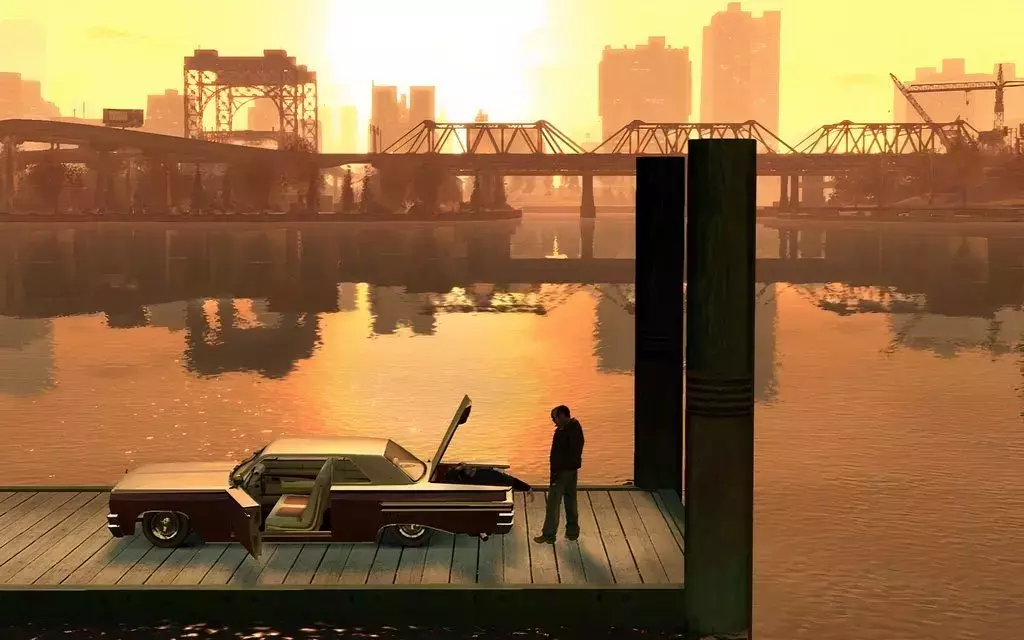
The Grand Theft Auto Series: A Tale of Disconnected Eras and Independent Narratives
The gaming world often grapples with the intricate challenge of narrative continuity, a struggle exemplified by series like The Legend of Zelda and Grand Theft Auto. While some franchises strive for a cohesive, interconnected timeline, others deliberately embrace a more fragmented approach. This distinction is crucial in understanding the enduring appeal and design philosophy behind these iconic titles.
The Grand Theft Auto (GTA) series, developed by Rockstar Games, stands out for its unique take on storytelling and world-building. Unlike Zelda's often convoluted and debated official timeline, GTA opts for clearly defined, self-contained eras: 2D, 3D, and HD. This strategic separation allows each era to function independently, minimizing narrative contradictions and offering players a fresh entry point with every new game. This design choice aligns with the core fantasy of many role-playing games, where players begin anew and forge their path to success. The continuous introduction of fresh protagonists, each starting at the bottom of the ladder, perfectly encapsulates the series' satirical yet aspirational portrayal of the American dream, where players climb to the top without being burdened by prior narrative baggage.
The Evolution of Grand Theft Auto's Narrative Structure
Grand Theft Auto's narrative architecture consciously diverges from a rigidly unified timeline, a decision that sets it apart from many other prominent gaming franchises. Rather than forcing a singular, unbroken story, Rockstar Games meticulously segments the series into distinct eras: the foundational 2D era, the expansive 3D era, and the graphically rich HD era. This intentional division addresses potential inconsistencies, such as different characters sharing the same name across games, by simply declaring their universes separate. This approach empowers each installment to present a unique world, allowing players to fully immerse themselves in individual narratives without needing extensive prior knowledge of the entire franchise. The overarching theme of self-made success, often presented through a satirical lens on the American dream, is perfectly served by this fresh-start philosophy, ensuring every game offers an unencumbered journey of aspiration and achievement.
Within each defined era of Grand Theft Auto, a clear and consistent sequence of events unfolds, yet the broader connection between these eras remains minimal, with only a few recurring elements like the radio personality Lazlow. This segmented approach is fundamental to the GTA experience, emphasizing individual game narratives over a sprawling, interconnected saga. The games allow players to embody new protagonists, each with a distinct backstory and journey, enabling a continuous exploration of the criminal underworld from varied perspectives. This focus on standalone stories within a shared thematic framework ensures that newcomers can jump into any major installment, such as GTA 6, without feeling lost or requiring extensive catch-up. This design choice strengthens the individual impact of each game, creating a rich tapestry of independent narratives that collectively contribute to the series' enduring legacy as a satirical reflection of ambition and societal critique.
Embracing Disconnected Narratives and World-Building
The intentional choice to maintain disconnected narratives within the Grand Theft Auto series facilitates a unique form of world-building that enriches the player experience without enforcing strict chronological adherence. This strategy allows each game to function as a self-contained entity, providing a complete journey from humble beginnings to ultimate success, which is a cornerstone of the series' appeal. This narrative independence means that players can engage with any GTA title without the pressure of understanding a complex, overarching timeline, fostering a sense of immediate accessibility and replayability. This approach aligns with the core gameplay loop, where players build their character and influence within a distinct environment, contributing to the series' iconic status as a satirical commentary on ambition and the pursuit of power within open-world settings.
While the GTA series largely features self-contained narratives, subtle elements like recurring background characters and passing references create a nuanced sense of continuity, enhancing the richness of the in-game worlds. This method of world-building mirrors the literary style of authors like Elmore Leonard, whose works feature independent stories that occasionally cross paths through familiar characters or settings. This loose integration deepens the sense of a lived-in universe without imposing a rigid timeline, allowing each game to stand strong on its own while benefiting from a broader, shared authenticity. For instance, the expansions to GTA 4, such as 'The Lost and Damned' and 'The Ballad of Gay Tony,' offer parallel perspectives on events within the same city, enriching the main narrative without directly altering its core. This collage-like approach to storytelling means that the order in which players engage with the games is less important than the immersive experience each title provides, ultimately making the series more robust and engaging as a collective body of work.