Japanese Film Industry Explores Innovative Funding Strategies Beyond Traditional Production Committees
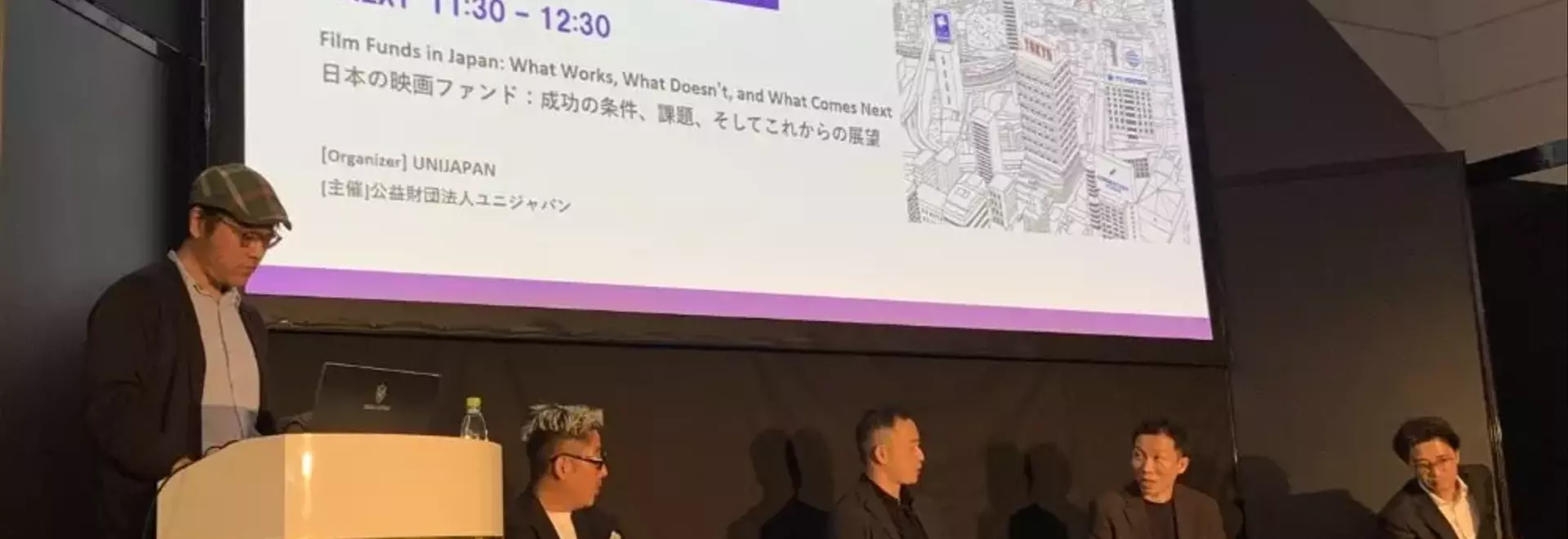
The Japanese film industry is in the midst of a significant transformation, moving beyond its traditional production committee framework to embrace more dynamic financing structures. This shift is driven by a need to overcome limitations such as budget caps, barriers to foreign investment, and the complexities of decision-making among multiple rights holders. A recent discussion at TIFFCOM, the content market associated with the Tokyo International Film Festival, brought together industry leaders to explore how specialized film funds could address these challenges while remaining compatible with Japan's unique market conditions.
The established production committee system, while effective in distributing financial risks among various companies, often restricts the scale of film projects to the collective investment capacity of domestic stakeholders. This can hinder the industry's global competitiveness and slow down project approvals as every party involved must reach a consensus. Panelists at TIFFCOM critically assessed these constraints, highlighting the necessity for innovative solutions to foster growth and international collaboration.
During the TIFFCOM panel, titled “Film Funds in Japan: What Works, What Doesn’t, and What Comes Next,” Kii Muneyuki, CEO and producer of K2 Pictures, presented a compelling alternative: the K2P Film Fund I. This fund, which secured approximately JPY5 billion (equivalent to $32 million) in February, represents a forward-thinking approach. Designed as a blind pool, it allows investors to commit capital before specific film projects are selected, providing filmmakers with more predictable funding. K2 Pictures, known for its collaborations with acclaimed directors such as Kore-eda Hirokazu, Miike Takashi, and Nishikawa Miwa, aims to finance around 50 films over a seven-year period through this initiative. The fund's investors include prominent entities like MUFG Bank, the Development Bank of Japan, and various other financial institutions and corporations, with a dedicated committee overseeing project approvals. Kii noted that five films supported by the fund had already premiered in theaters within the current year.
Kii also underscored a crucial aspect for film funds: establishing effective mechanisms for returning revenue to creators, particularly from diverse distribution channels like streaming platforms, beyond initial theatrical releases. He emphasized the difficulty of relying solely on international box office performance and stressed the importance for Japanese companies to cultivate business models extending beyond conventional distribution practices.
The panel further engaged in a comparative analysis of film financing models in other key markets, including the United States and South Korea. In the U.S., producers frequently combine pre-sales with completion guarantees to secure bank loans, where a completion guarantee ensures a film's on-budget and on-schedule delivery, irrespective of its commercial success. South Korea, on the other hand, leverages a robust public-private partnership framework, utilizing government-backed guarantees to facilitate bank financing for film projects. These international examples provide valuable insights for Japan as it seeks to refine its own financial ecosystem for cinema.
Nakagawa Keita, managing director at MUFG Bank, unveiled details of a Japan-specific feasibility study commissioned by the Ministry of Economy, Trade and Industry. MUFG was tasked with conducting this study, which commenced on March 31 and is slated to conclude in February 2027. The study's objective is to utilize real-world data to develop viable valuation and completion-guarantee models tailored to the Japanese market. It will comprehensively assess the entire process, from application and review to contract drafting, with the aim of determining the practicality of such financing tools. It is important to note that while this study explores feasibility, it does not inherently guarantee the availability of financing or completion guarantees in the future.
The discussion concluded by identifying four critical areas for future development: regulatory clarity, capital availability, creator compensation, and streamlined cross-border collaborations. These priorities involve clarifying which regulations need to be expanded and when, integrating debt financing with subsidies and completion guarantees, and embedding robust creator return mechanisms within fund structures. Speakers also highlighted persistent hurdles to international investment, such as language barriers and tax implications, including "permanent establishment" rules that can expose foreign investors to Japanese tax liabilities.