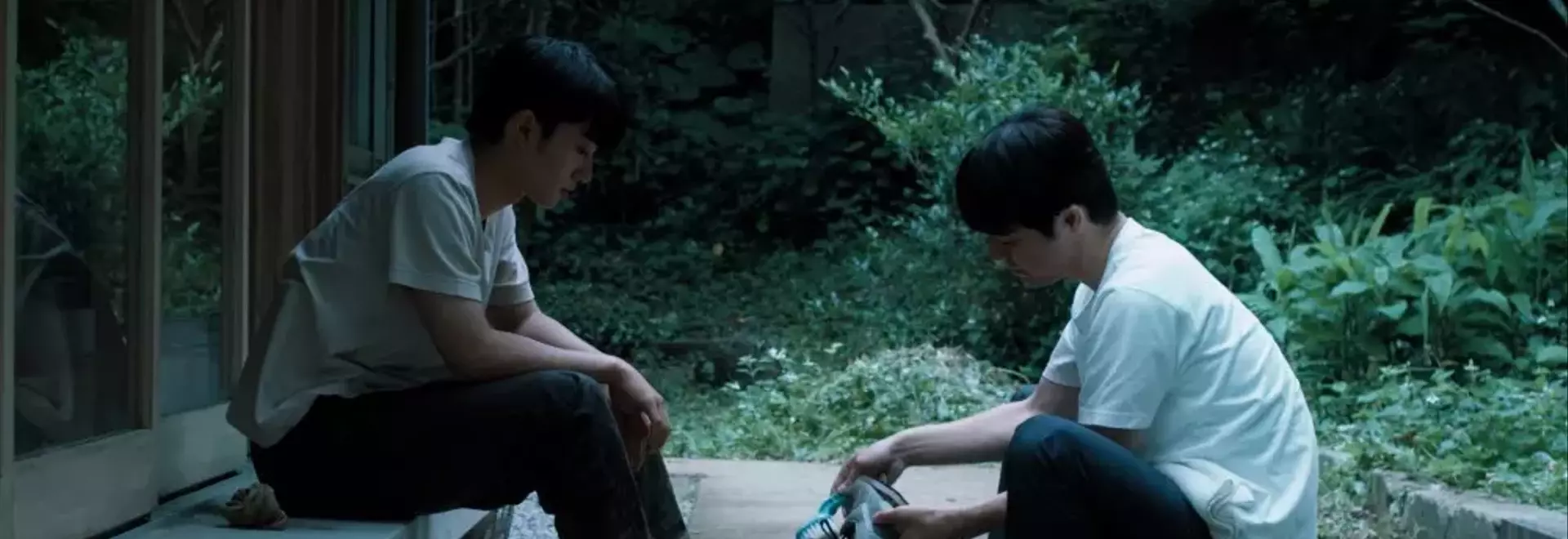
A Reflective Look at "Hinotama: Ball of Fire" - A Young Director's Poignant Exploration of Family Dynamics
Unveiling Domestic Truths: A Glimpse into a Child's World
The Precision of Everyday Life and Nascent Discontent
From its opening sequences, Yaza Takenoshin's initial cinematic offering, "Hinotama: Ball of Fire," establishes a meticulously choreographed rhythm, echoing the predictable cadence of daily routines. This precision is artfully juxtaposed with the subtle emergence of familial discord, as young Takeshi observes the gradual unraveling of his parents' relationship. The film adeptly captures the quiet erosion of domestic harmony, presenting it not as a sudden cataclysm but as an almost mechanical, yet deeply unsettling, process. His childhood innocence begins to wane, replaced by a growing fascination with an enigmatic "ball of fire," an escape from the palpable tension within his home.
Artistic Lineage and Visual Storytelling
Takenoshin's cinematic approach clearly draws from the stylistic wellspring of esteemed filmmakers like Ryusuke Hamaguchi. This influence is evident in the film's deliberate and unwavering camera work, which, far from being static, serves as a patient observer of emotional landscapes and relational shifts. The collaboration with Yoshio Kitagawa, a frequent cinematographer for Hamaguchi, further reinforces this connection. Kitagawa's aesthetic, characterized by symmetrical framing and clean lines, initially imbues Takeshi's home with an impression of order. However, as the narrative unfolds, these orderly compositions subtly transform into visual metaphors for confinement, underscoring the mother's simmering frustration, expertly conveyed through Mari Kusu's performance.
The Cracks in the Foundation: Escalating Tensions
The film gradually introduces sharp, succinct exchanges that disrupt the visual serenity. Takeshi's father, initially hinting at his discontent, soon escalates to overt demands for respect and expressions of his unappreciated efforts. These confrontations expose a deep-seated dissatisfaction, likened to a life lived on an assembly line, devoid of genuine emotion. Takeshi, observing these developments with a quiet resignation, eventually reaches a breaking point, a moment vividly symbolized by his deliberate act of defiance. The camera's sustained gaze during this act, a hallmark of Takenoshin's measured pacing, amplifies its unexpected impact.
Character Depths and Subtlety in Performance
Takeshi's father is painted as a man of petty pride, a trait that the film consistently elaborates upon without resorting to overt character shifts. Takenoshin masterfully accumulates small, telling details, revealing a man who, while not overtly malicious, skillfully manipulates memories to justify his intentions to his children as the family unit fractures. The director elicits understated performances from his ensemble, particularly from Riku Onishi, whose portrayal of Takeshi captures the quiet internal struggle of a boy retreating inward, his frustrations often expressed through his preoccupation with the mythical "ball of fire."
Narrative Shifts and Allegorical Undertones
While the film's deliberate and muted tone effectively conveys the familial dynamic, certain moments, such as the children forming an orderly line, occasionally feel contrived, slightly disrupting the established uncomfortable realism. A sudden temporal leap further destabilizes the narrative, yet it also ushers in moments of profound emotional resonance, especially through the character of Kento, Takeshi's younger brother, who is forced into premature maturity. As "Hinotama" progresses, it ventures into more allegorical territory, a thematic choice that, while ambitious, sometimes diverges from the film's core strength: its incisive and gradual examination of a traditional family's disintegration. Despite these occasional departures, the film undeniably stands as a remarkably promising debut.