Scaling New Heights: The Unlikely Story Behind Peak’s Creation
Discover How Two Game Studios Climbed to Success in Just 30 Days
A Rivalry That Sparked Innovation
The genesis of *Peak* was far from traditional. It didn’t stem from months of planning or a carefully curated pitch deck. Instead, its creation was fueled by a sense of professional envy—a spark that often ignites some of the most groundbreaking ideas. When Aggro Crab, the studio behind *Another Crab’s Treasure*, learned that *Content Warning* had been developed in just one month and went on to achieve massive commercial success, it challenged everything they thought they knew about game development timelines. For Nick Kaman, head of Aggro Crab, this revelation wasn’t just shocking—it was motivating. “It turned everything we know about game development upside-down,” he admitted in an interview with PC Gamer, highlighting how quickly the landscape was shifting beneath their feet.
This unexpected success story prompted Aggro Crab to reach out to Landfall, the developer behind *Content Warning*, asking if they could participate in their next game jam. The invitation was accepted, and within weeks, a small team from Aggro Crab found themselves flying to Korea for what would become a pivotal creative experiment. Rather than viewing this as a shortcut to success, the developers approached it as a test of their adaptability, teamwork, and ability to think outside the box. The results were more than promising—they laid the foundation for *Peak*, a game that would soon capture the attention of players worldwide.
From Hot Tubs to High Stakes: The Evolution of an Idea
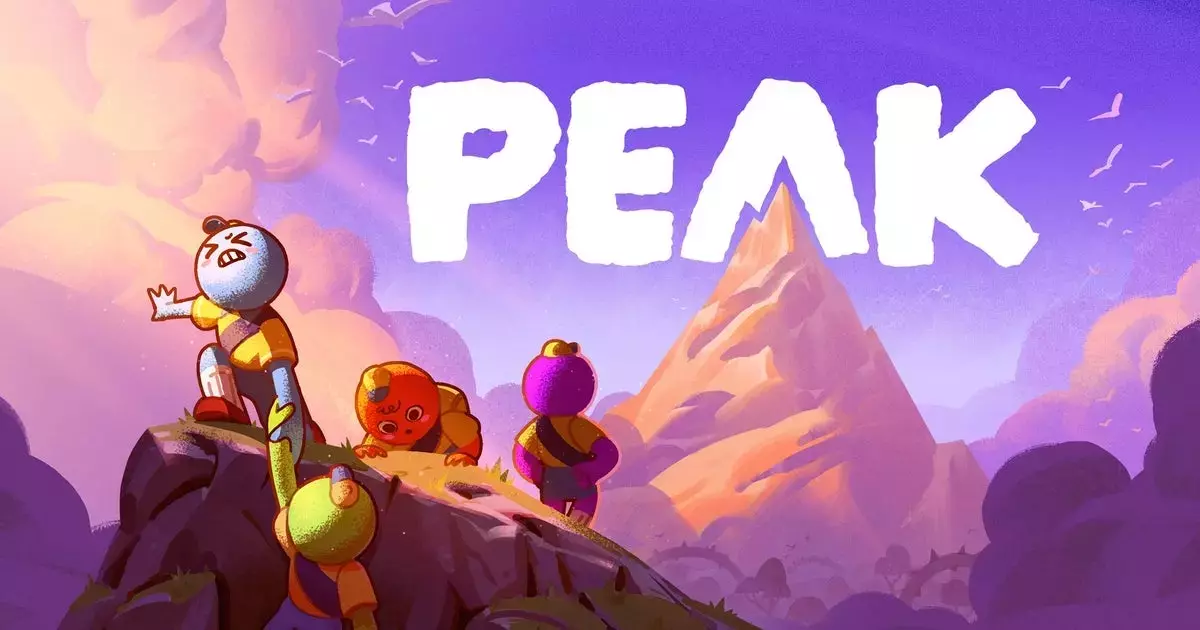
Interestingly, the concept for *Peak* had actually taken shape long before the Korean game jam. As Caelan Rashby-Pollock, creative director at Aggro Crab, recalled, the initial spark came while relaxing in a hot tub in Sweden. At the time, the vision was vague—something along the lines of an open-world survival experience—but the core theme of a group of lost scouts navigating a mysterious island resonated strongly with the team. More importantly, the potential for dark humor and chaotic gameplay scenarios immediately caught everyone’s imagination. “We all quickly got excited about being a group of lost scouts on an island, and the macabre slapstick that can come from that,” Rashby-Pollock explained, emphasizing how tone and atmosphere played a crucial role in shaping the final product.
By the time the developers arrived in Korea, they had a rough but compelling framework to build upon. The team secured an Airbnb in Hongdae, converted it into a makeshift office using IKEA furniture, and dove headfirst into the project. There were no distractions, no unnecessary meetings—just focused, collaborative effort. Every day revolved around building mechanics, refining controls, and experimenting with new ways to make mountain climbing both fun and hilariously frustrating. Even meals became brainstorming sessions, with conversations constantly circling back to how they could push the boundaries of co-op gameplay further. For Kaman, the experience was unlike anything he’d encountered before. “While it was pretty intense, it was also the most fun I’ve ever had working on a game,” he reflected, underscoring how immersion and shared purpose can elevate even the most demanding creative processes.
The Reality Behind Rapid Development
Despite the seemingly miraculous speed at which *Peak* came together, it’s important to recognize that such feats aren’t easily replicable. Both Aggro Crab and Landfall are veteran studios with years of experience under their belts. Their ability to execute a complex co-op game in just thirty days wasn’t due to luck—it was the result of refined instincts, technical proficiency, and a deep understanding of what makes games engaging. Kaman himself acknowledged this reality, cautioning aspiring developers against interpreting *Peak*’s rapid development as a blueprint for overnight success. “Sales are absolutely not an indicator of quality by any means,” he said, stressing that the game’s popularity shouldn’t be mistaken for a shortcut to achievement.
What made *Peak* stand out wasn’t just its premise or its launch timeline—it was the seamless blend of chaos, cooperation, and creativity that defined its gameplay. Unlike traditional climbing simulations, *Peak* embraced unpredictability, turning every ascent into a comedic struggle filled with missteps, physics-defying moments, and frantic teamwork. Players weren’t just scaling mountains; they were navigating absurd terrain, improvising solutions, and laughing through setbacks. This unique approach to movement-based co-op play tapped into something inherently human—the joy of overcoming obstacles together, even when things go hilariously wrong.
Cultural Fusion and Collaborative Ingenuity
The setting of the game jam in Korea added another layer of richness to the development process. Beyond the obvious logistical benefits of working in close quarters, there was a cultural exchange that infused the project with fresh energy. The developers weren’t just collaborating across disciplines—they were learning from each other’s backgrounds, adapting to new environments, and drawing inspiration from local culture. Even simple activities like exploring neighborhoods, sampling regional cuisine, and absorbing the rhythm of life in Seoul helped fuel creativity in unexpected ways.
Moreover, the physical space they created in Hongdae became more than just a workspace—it evolved into a shared hub of innovation. The IKEA-fueled setup, though temporary, fostered a sense of camaraderie and collective ownership over the project. By the end of the month, the donated furniture symbolized more than just generosity; it represented the spirit of the indie community itself—resourceful, communal, and deeply interconnected. This ethos translated directly into the game’s design, where cooperation wasn’t just encouraged—it was essential.
Why Peak Matters in Today’s Indie Landscape
*Peak* serves as a reminder that innovation doesn’t always require massive budgets or multi-year development cycles. Sometimes, the best ideas emerge when teams strip away complexity and focus on what truly matters—fun, interaction, and memorable experiences. In many ways, *Peak* is a love letter to co-op gaming, celebrating the messy, unpredictable, and often hilarious moments that arise when people work together toward a common goal. It challenges the notion that polish and perfectionism are prerequisites for success, instead championing raw, unfiltered creativity.
For the broader indie scene, *Peak* represents a shift in mindset. It proves that experienced developers can still take risks, explore unconventional formats, and deliver high-quality experiences without sacrificing creative freedom. It also highlights the growing importance of game jams as incubators for bold ideas, offering a structured yet liberating environment for experimentation. While not every jam-born game will achieve the same level of visibility, *Peak* demonstrates that with the right combination of talent, timing, and teamwork, even the shortest development periods can yield extraordinary results.
Ultimately, *Peak* isn’t just about climbing mountains—it’s about breaking boundaries, embracing chaos, and finding joy in the climb itself. Whether you’re a developer looking for inspiration, a gamer seeking a new challenge, or simply someone who appreciates the artistry behind great games, *Peak* offers a compelling case study in what happens when creativity meets constraint. And while its origins may be unusual, its impact is undeniable—proving once again that in the world of game development, sometimes the most incredible journeys begin with the simplest of ideas.