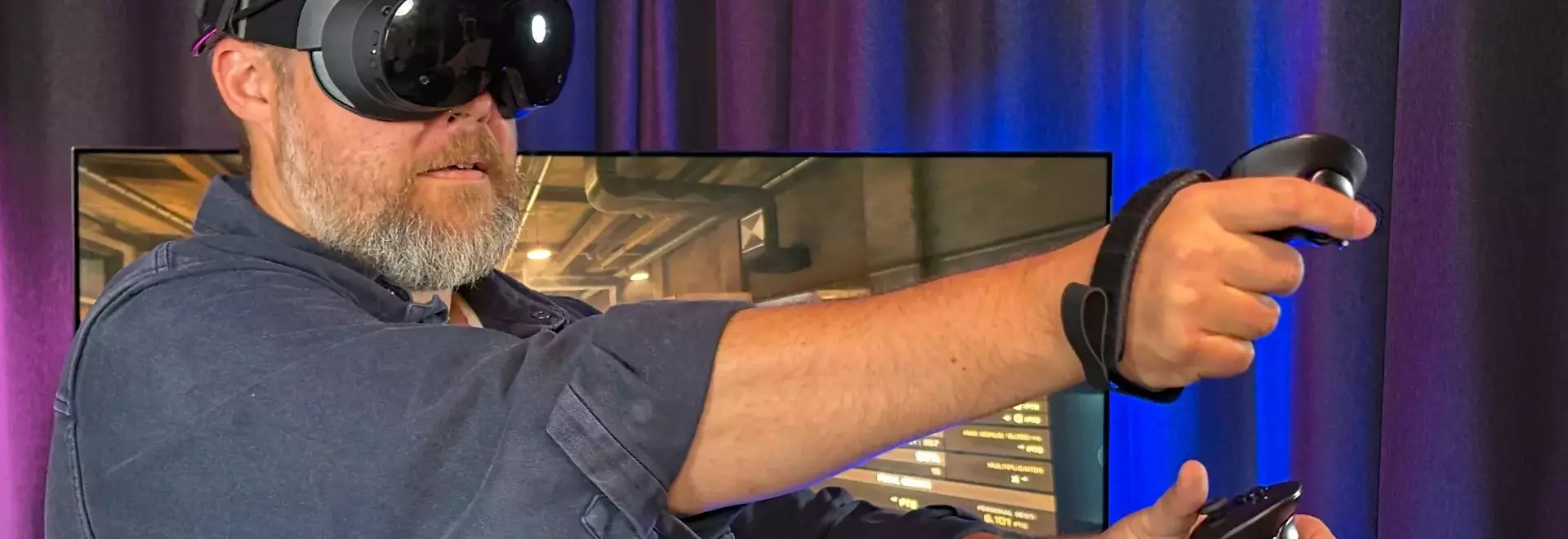
Valve's Journey to the Lightweight Steam Frame VR Headset
Innovation in Vision: The Evolution of VR at Valve
Early Prototypes and the Pursuit of Comfort
The Steam Frame, Valve's newest virtual reality offering, stands out for its exceptional comfort and lightweight design. However, this groundbreaking device is the culmination of years of rigorous development and critical self-evaluation. Valve's engineers, including Joy Lyons and Jeremy Selan, disclosed that advanced VR headsets were actually conceptualized and prototyped three to four years prior to the Steam Frame's launch. These initial designs were considerably more substantial, resembling the form factor of the Valve Index. A pivotal moment occurred when the team experienced these early prototypes firsthand, realizing they didn't meet Valve's aspirations for the next generation of VR products. This honest assessment led to a strategic decision to discard those designs and recommit to the drawing board, focusing intensely on achieving a significantly improved user experience centered around comfort and reduced bulk.
Navigating Market Realities and Development Challenges
The timing of a new VR headset release is always critical, especially in a market facing fluctuating sales and economic uncertainties. When questioned about the rationale behind launching the Steam Frame amidst a period where VR headset shipments were declining and hardware costs were volatile, Selan emphasized Valve's unwavering commitment to quality and readiness. He explained that the company operates on an 'as soon as we can' philosophy, meaning the Steam Frame was released at the earliest possible juncture where it met their stringent standards. The hardware engineering teams undertook numerous iterations, meticulously refining the design to achieve its remarkably small form factor, lightness, and comfort. This extensive process involved complex trade-offs concerning power consumption, battery weight, and thermal management. Although initially targeting an earlier release, supply chain disruptions, component shortages, and broader economic factors ultimately dictated the current launch timeline, reinforcing that the present was indeed the soonest they could proudly deliver the device.
Software Innovation Driving Hardware Evolution
Beyond the physical design, the Steam Frame's success is deeply rooted in Valve's extensive software advancements. Joy Lyons highlighted that the focus on being lightweight and comfortable was not solely a hardware endeavor but also a testament to years of software development. The experience gained from portable systems like the Steam Deck, particularly in emulation and operating system work with Proton, was instrumental. Proton's ability to run Windows-based games on Linux, especially on the SteamOS platform, laid crucial groundwork. Now, with an ARM-based device, Valve leverages FEX for running x86 games on ARM hardware and Lepton for integrating Android-based games into the SteamOS ecosystem. These software layers collectively enable the Steam Frame to seamlessly translate vast libraries of games, making it a versatile platform capable of accessing both PC VR titles and the rich content available on Meta Quest's Android-based Horizon OS.
A New Era of Versatile VR Gaming
The convergence of advanced hardware design and sophisticated software makes the Steam Frame a true "VR nexus point." It excels as a PC VR device, offering seamless wireless streaming of games from a personal computer. Simultaneously, it functions as a standalone unit, adeptly translating a user's x86 PC Steam library to run on its ARM-based architecture, almost effortlessly. The integration of Lepton further expands its horizons, allowing users to play Android games directly through Steam. This isn't merely about experiencing mobile games on a larger screen; it's a strategic move to tap into the extensive ecosystem of VR content developed for platforms like Meta Quest. This newfound versatility has even surprised Valve's engineers, as Lyons recounted the joy of effortlessly downloading and playing various games, appreciating the device's capabilities without the usual critical engineering lens. Selan echoed this sentiment, noting a personal shift from preferring his Steam Deck to the Steam Frame, signifying that the new hardware had reached a point where it was genuinely becoming a transformative product in the VR landscape.