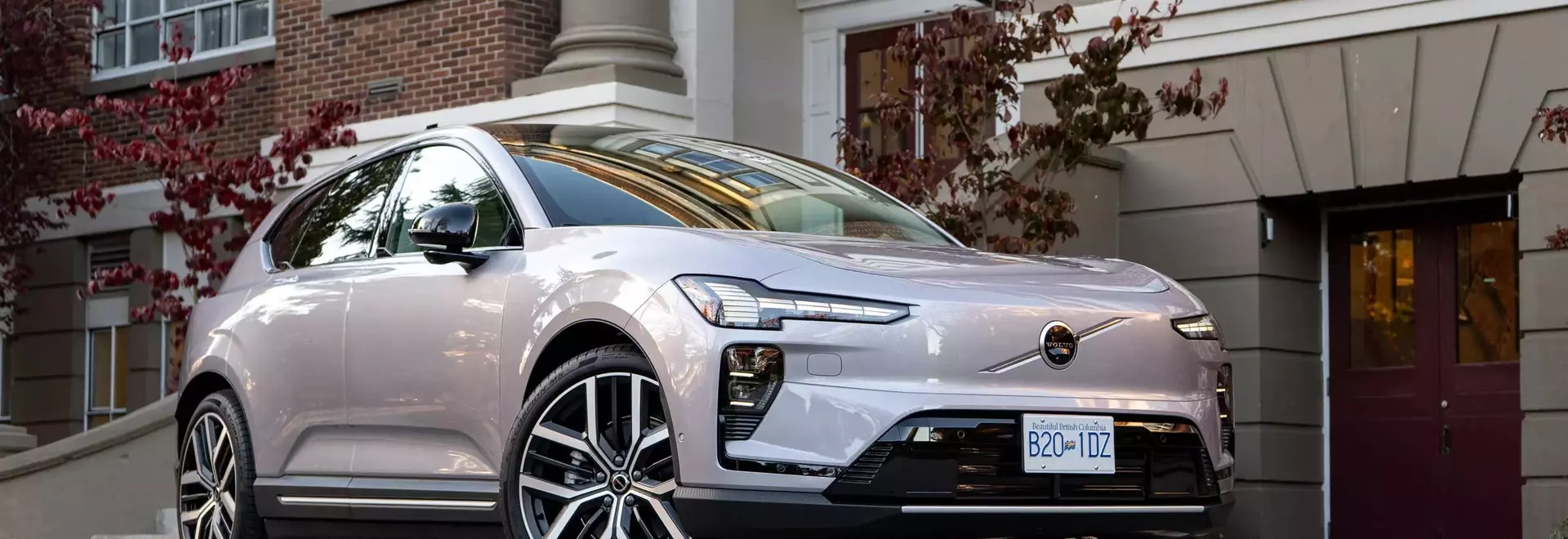
Volvo's U.S. Consumer Confidence Plummets Amidst Market Challenges
Volvo Cars is experiencing one of its most challenging periods in the U.S. market in the last five decades. The company's struggles are a result of several intertwined issues: substantial import tariffs imposed by the U.S. on electric vehicles produced in China, a notable slowdown in EV sales after the discontinuation of federal tax incentives, and the unfortunate ban preventing its affiliated brand, Polestar, from conducting sales in the American market. These factors collectively have made it exceptionally difficult for the Chinese-owned Swedish automaker to maintain profitability in the expansive North American automotive landscape. The company's third-quarter financial reports confirmed these difficulties, with executives admitting that U.S. consumer confidence in the brand has reached an unprecedented low in fifty years.
Volvo Grapples with U.S. Market Headwinds and Strategic Adjustments
During a recent earnings call, Erik Severinson, Volvo's Chief Commercial Officer, candidly stated that achieving profitability in the U.S. market has proven to be an arduous task, citing that American consumer sentiment has reached a 50-year nadir. CEO Hakan Samuelsson acknowledged that Volvo had underestimated the full impact of tariffs on its U.S. operations, emphasizing the critical need for increased localization of production within the United States. To mitigate these tariff-related challenges and streamline sales processes, Volvo has strategically reorganized the U.S. market into four distinct regions, aiming for more agile decision-making.
Despite these efforts, the discontinuation of its more affordable EV models, the EX30 and EX40, after the 2026 model year, coupled with the problematic rollout of the EX60, has disappointed both U.S. dealers and prospective buyers. Nevertheless, Volvo has committed to introducing a new global EV with a base price under $40,000 to the U.S. market starting in 2027, signaling a renewed focus on accessible electric mobility.
Enhancing local production of Volvo vehicles in the United States is a logical step, particularly given that its South Carolina manufacturing facility is currently operating at only 20% of its annual 150,000-vehicle capacity. This plant, which already produces the Volvo EX90, is poised to commence production of the globally popular XC60. By the decade's end, the Ridgeville plant, located near Charleston, will also assemble a next-generation hybrid model. Furthermore, while the facility currently produces the Polestar 3 SUV, this will cease after the 2026 model year due to Polestar's impending market exit from the U.S. Earlier this year, Volvo Cars' CEO expressed willingness to open its U.S. plant to other manufacturers, an initiative designed to maximize the utilization of its underemployed manufacturing capabilities.
Globally, Volvo Cars recorded a net loss of approximately $482 million in the third quarter, with an operating loss of $378 million. These figures reflect significant market contractions in China and the aforementioned adverse conditions in the U.S. The third-quarter results were further impacted by a negative revaluation of $112 million in CAFE credits due to legislative changes in the U.S., unfavorable raw material price movements, and a $92 million loss attributed to Polestar's second-quarter 2026 performance. In the U.S., Volvo Cars sold 23,766 vehicles in the third quarter, marking an 8.7% decrease year-over-year. This decline was primarily driven by diminished consumer confidence, heightened competition in the SUV segment, and a softening demand for electrified vehicles. In response, the automaker is accelerating the production of long-range plug-in hybrid versions of the XC90 and XC60, with deliveries slated to begin this year in Europe and shortly thereafter in the U.S.
This report from Volvo Cars underscores the dynamic and often unforgiving nature of the global automotive market, particularly when navigating complex trade policies and evolving consumer preferences. The company's proactive strategies, such as increasing production localization and accelerating the introduction of new hybrid models, demonstrate a resilient approach to overcoming significant hurdles. It serves as a reminder that even established brands must constantly adapt and innovate to sustain their market presence and profitability in an increasingly competitive and regulated environment. For consumers, the promise of new, more affordable EV options and enhanced production in the U.S. could eventually translate into a more robust and appealing lineup from Volvo.