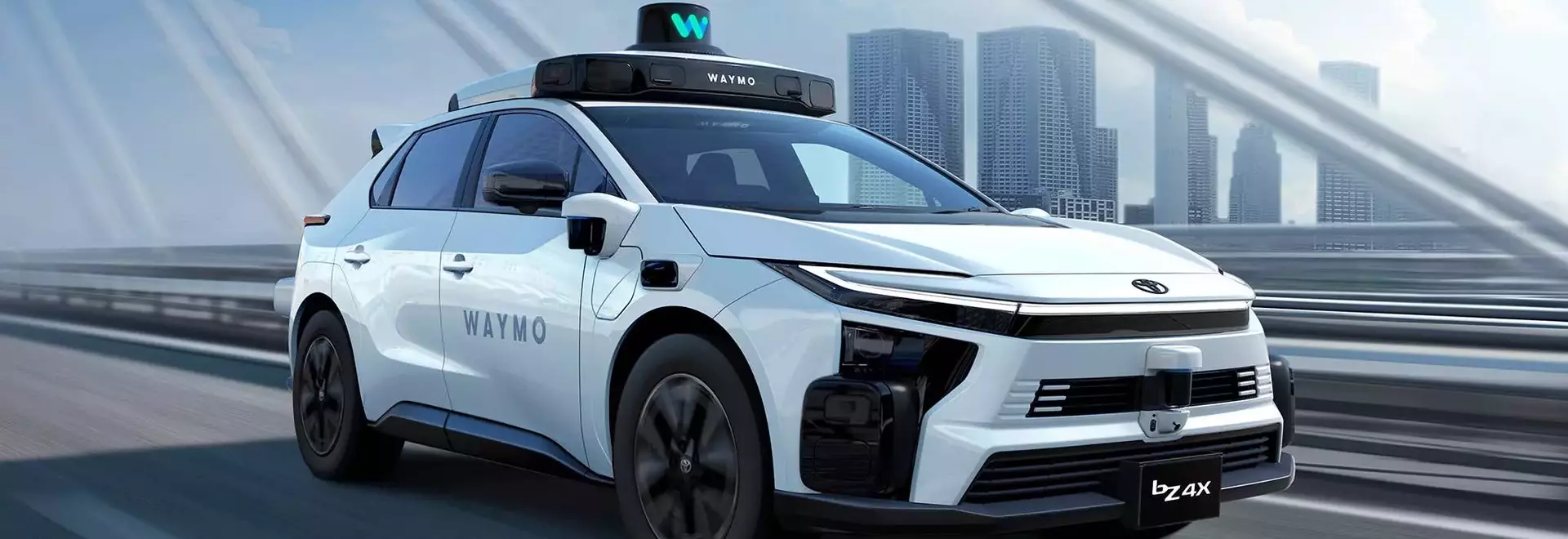
Waymo Transforms Toyota's Electric SUV into a Driverless Robotaxi
Toyota and Waymo are embarking on an exciting new chapter in autonomous vehicle technology, leveraging Toyota's manufacturing prowess and Waymo's self-driving expertise. Their joint venture aims to convert the electric Toyota bZ4X SUV into a fully autonomous robotaxi. This initiative, which begins with rigorous testing in Japan next year, is poised to launch Japan's first homegrown autonomous ride-hailing service, with plans for subsequent expansion into key international markets.
The Journey of the Driverless bZ4X
In a significant collaboration forged 18 months ago, automotive giant Toyota and autonomous driving pioneer Waymo have unveiled the ambitious next phase of their partnership: the development of a robotaxi fleet based on the Toyota bZ4X electric crossover. This advanced driverless vehicle will commence its testing and validation journey in Japan in the coming year, marking a pivotal moment for the nation's autonomous transport sector. The goal is to establish Japan's first domestically manufactured, fully autonomous ride-hailing service, subsequently extending its reach to other major global markets.
The transformation of the Toyota bZ4X into a robotaxi will involve significant enhancements to optimize passenger comfort and accessibility. The vehicle will feature improved rear legroom, automatic doors, a power liftgate, and specialized ambient lighting to facilitate effortless entry and exit. Crucially, these vehicles will be equipped with Waymo's cutting-edge self-driving technology, which boasts an impressive 93% customer satisfaction rate, underscoring its reliability and user confidence. The entire manufacturing process, from vehicle assembly to the integration of Waymo's hardware, will be consolidated at Toyota's Takaoka plant in Toyota City, Japan, ensuring a seamless and efficient production pipeline.
This partnership is driven by a shared vision to not only offer more convenient transportation options, particularly for individuals with mobility challenges, but also to significantly reduce traffic accidents caused by human error. Waymo co-CEO Dmitri Dolgov emphasized the enhanced safety record of their autonomous systems, stating that in operational areas, Waymo vehicles are up to 20 times safer than human-driven cars regarding serious crash injuries. This collaboration with Toyota is expected to accelerate the global deployment of safe and convenient autonomous driving solutions.
Following successful testing and validation in Japan, the autonomous Toyota bZ4X fleet is slated for deployment there, followed by an expansion into the United Kingdom, prioritizing right-hand-drive markets. While additional Waymo-serviced markets are anticipated in the future, specific timelines for the United States have not yet been announced. Beyond ride-hailing, both companies are committed to exploring how insights gained from the bZ4X robotaxi project can accelerate the integration of autonomous technology into privately owned Toyota vehicles, potentially offering consumers a reliable, Tesla-rivaling self-driving experience.
Reflecting on the Future of Autonomous Mobility
This groundbreaking collaboration between Toyota and Waymo represents a profound leap forward in the realm of autonomous transportation. It's not merely about creating driverless cars; it's about reimagining urban mobility, enhancing safety, and democratizing access to convenient travel. The meticulous approach of validating these robotaxis first in Japan, a country renowned for its technological adoption and stringent standards, instills confidence in the global rollout. For me, the most compelling aspect is the dual focus: immediate deployment in ride-hailing services and the long-term vision of integrating this advanced technology into personal vehicles. This promises a future where commutes are safer, more efficient, and accessible to a wider demographic, fundamentally transforming our relationship with transportation and paving the way for truly intelligent road infrastructure.