Emirati Cinema's Resurgence: Local Stories and Global Ambitions
Emirati cinema is experiencing a renewed vitality, with local filmmakers making significant strides in telling their unique stories. This resurgence is particularly evident at the 13th Sharjah International Film Festival for Children and Youth, where two prominent Emirati directors, Khalid Al Mahmood and Abdulrahman Al Madani, are presenting their latest works. Their films, “The Mangrove House” and “Oug,” are the sole Emirati entries in competition, symbolizing a growing momentum within the nation's film industry after a period of instability.
Both filmmakers have strong ties to the Sharjah International Film Festival (SIFF). Al Mahmood's musical feature, "The Mangrove House," which premiered as the festival's opening film, received crucial post-production support from FANN – Media Discovery Platform, SIFF's parent organization, after being pitched at last year's inaugural Film Pitching Session. For Al Madani, "Oug" marks his third film to be screened at SIFF, following his previous entries "Nagafa" (2015) and "Laymoon" (2019), underscoring his consistent engagement with the festival over the years.
Al Mahmood, whose filmmaking journey began in 1999 while studying in the United States, recalls returning to a nascent Emirati film scene. Early gatherings and screenings, which later evolved into the Emirates Film Competition, served as vital training grounds for a burgeoning community of filmmakers. The subsequent emergence of festivals like the Dubai International Film Festival and Abu Dhabi Film Festival fostered a dynamic ecosystem.
However, this vibrant period faced setbacks, as many festivals eventually ceased operations. Al Madani experienced this shift firsthand, describing the "privilege" of abundant platforms before "the plug was pulled." While the Abu Dhabi Film Festival remains dormant, the Dubai Film Festival is slated to return in December 2027 after its last edition in 2017. This decline prompted Al Madani and many of his peers to seek international opportunities, a period that served as a "wake-up call" to diversify their reliance on domestic platforms.
Despite these challenges, institutional backing for Emirati cinema is on the rise. Al Madani's film "Oug" benefited from a grant from the UAE Ministry of Culture, a significant development compared to earlier times when financial support was almost non-existent. He views this as a promising beginning, stating, "People feel like they can go and apply somewhere [local] to get funding." However, Al Mahmood notes that much of the UAE's existing film infrastructure primarily aims to attract international productions, rather than nurturing local talent. He emphasizes the need for a more comprehensive infrastructure to facilitate domestic film production.
Distribution also presents a considerable hurdle for local filmmakers. In response, Al Madani launched Meylas Aflam, an initiative designed to extend the lifespan of Emirati short films beyond their initial festival runs. He highlights the enthusiasm of local audiences, with Meylas Aflam's four sold-out screenings this year leading to hour-long post-screening discussions. This success challenges the "misconception that our audience is not prepared for our stories," as Al Madani's YouTube films have garnered millions of views, demonstrating a strong appetite for authentic local narratives.
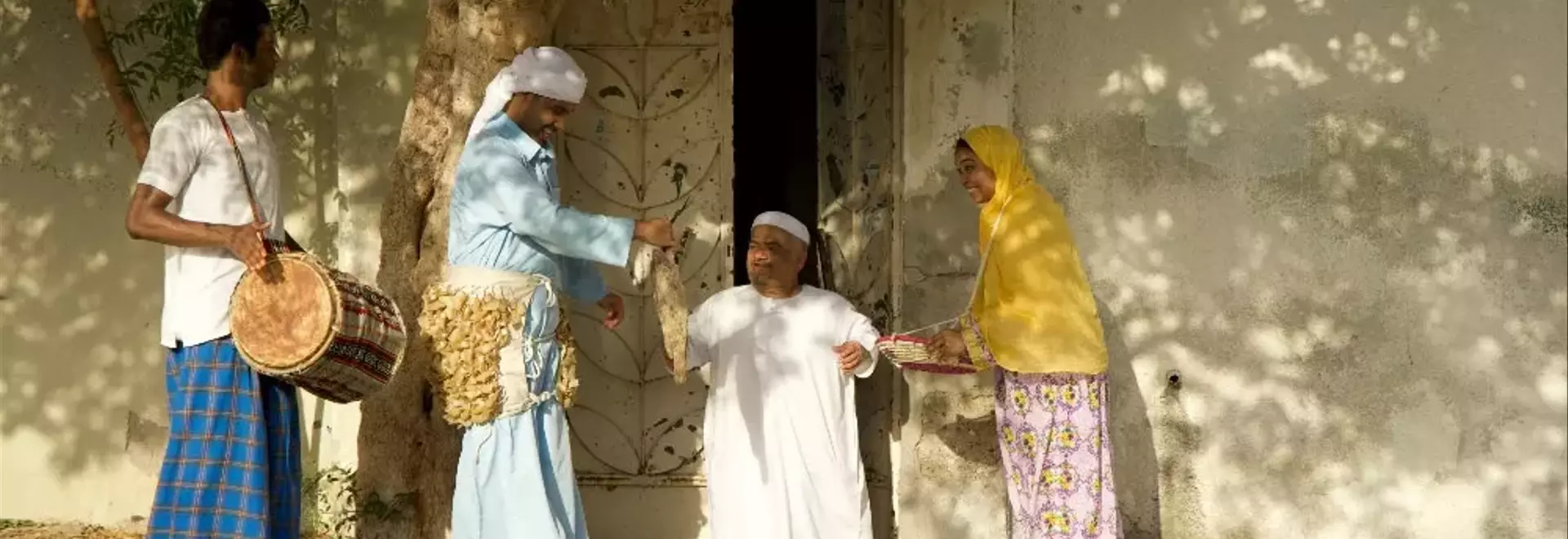
Al Mahmood's "The Mangrove House" is a musical centered on two deaf brothers and their sister who are trying to secure funds for a competition. The concept originated from Emirati writer and editor Ayesha Alameri, whose personal experiences with a deaf brother inspired the narrative. Al Mahmood was particularly drawn to the screenplay's unconventional portrayal of disability, avoiding typical melancholic themes. He described his surprise: "Usually the stories are all sad... Instead, what appealed to him was precisely what the screenplay avoided. 'There's no pity. I didn't feel like they were anything less than any other character.'" Alameri's own conversations with her brother, who questioned why stories about deaf characters were always sad, influenced this approach. Al Mahmood adapted Alameri's 23-page script, focusing on a single section and transforming it into a musical, which allowed him to infuse the film with Emirati cultural elements, including local instruments, clothing, and songs.
Al Madani's film "Oug" draws inspiration from social observations. The title, meaning "the defect," refers to the societal pressure on women who haven't had children in their marriages. The idea stemmed from his conversations with married women, including a relative, who faced intrusive questions and underwent various measures to conceive. He questioned the gender imbalance in such expectations, asking, "what about your husband? Does he have to do anything?" The film primarily unfolds during a shopping trip to IKEA, depicting a couple's confrontation with the husband's mother, as societal pressures come to the fore. Al Madani chose a public setting to intensify the emotional conflict while maintaining a veneer of composure. He deliberately avoided casting the mother-in-law as a one-dimensional antagonist, instead presenting a nuanced family dynamic where each character grapples with different societal expectations, culminating in the husband's emotional vulnerability. The film's international screenings have yielded surprising reactions, with audiences at Denmark's Odense Film Festival expressing astonishment at the strong, non-passive portrayal of hijab-wearing women. Al Madani emphasizes that he was merely depicting the reality of his environment, which inadvertently challenged stereotypes.
Both filmmakers are now focused on transitioning from short films to feature-length projects. Al Mahmood is in the early stages of a "very artistic" feature, while Al Madani has dedicated the past year to developing a feature screenplay, identifying funding as the primary barrier. After directing seven short films, Al Madani feels prepared for this next step and believes many other Emirati filmmakers share his ambition to move beyond short-form storytelling, underscoring the collective desire for continued growth and evolution within the local industry.