The Golden Age of V10 Engines: A Decade of Power and Innovation
Relive the Roaring Twenties (2000s Edition): When V10s Conquered Every Segment
A New Era of Power: The Rise of V10 Engines in the Early 2000s
As the millennium turned, automotive engineers sought to push the boundaries of performance, finding V8 engines somewhat conventional and V12s a touch too opulent. This quest for a middle ground led to a significant surge in the development and integration of V10 powerplants. It was a time when manufacturers, driven by a spirit of innovation, began fitting ten-cylinder engines into an unexpected array of vehicles, democratizing what was once an exclusive supercar feature.
V10 Powerhouses: From Heavy-Duty Pickups to High-Performance Sports Trucks
The versatility of the V10 engine was exemplified in the truck segment, where it served drastically different purposes. Dodge led the charge with its Magnum V10, initially offered in heavy-duty Ram 2500 and 3500 models, providing robust power for demanding tasks. Ford soon followed with its Triton V10, competing in the heavy-duty sector. However, the Dodge Ram SRT-10 showcased the V10's potential for pure performance, transplanting the Viper's potent 8.3-liter V10 into a pickup to create a legendary muscle truck.
German Engineering Meets V10: Luxury Sedans Transformed into Executive Expresses
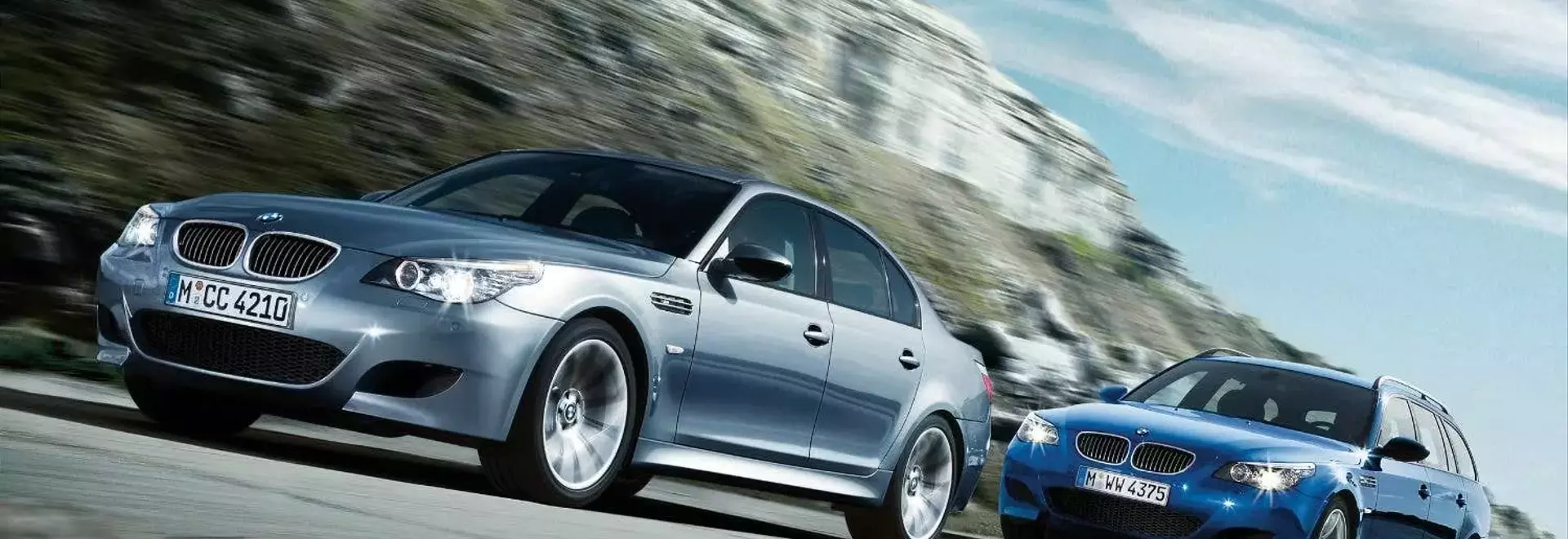
Across the Atlantic, German luxury carmakers BMW and Audi embraced the V10 for their executive sedans. BMW's E60 M5, featuring an F1-inspired 5.0-liter V10 (S85), set a new benchmark for high-performance sedans with its impressive power and high-revving nature. Audi countered with the C6 S6 and later the twin-turbocharged RS 6, demonstrating different philosophies in V10 integration. Volkswagen even pioneered the segment with the Phaeton V10 TDI, introducing the world's first V10 diesel sedan, highlighting the engine's adaptability beyond traditional gasoline applications.
The Ultimate Family Haulers: V10 Engines Powering Performance Wagons
The rivalry between Audi and BMW extended to the station wagon segment, where both brands introduced V10-powered variants. Audi's S6 Avant brought ten-cylinder power to a practical family car, soon to be matched by BMW's M5 Touring, which revived the M-badged wagon with its potent V10. This competition ultimately culminated in the RS 6 Avant, whose twin-turbo V10 delivered unparalleled performance, showcasing that family utility could coexist with supercar-level power.
Ten Cylinders in SUVs: A Tale of Two Extremes
Even the SUV market saw V10 integration, albeit in two contrasting forms. The Ford Excursion, a behemoth derived from the Super Duty truck, offered the 6.8-liter V10 for heavy-duty towing and utility. On the other end of the spectrum, the Volkswagen Touareg V10 TDI introduced a sophisticated, high-torque diesel V10 into the luxury SUV segment, later amplified in the performance-oriented R50 model. These examples underscored the V10's ability to cater to diverse consumer needs, from rugged utility to refined performance.
V10 in its Natural Habitat: Iconic Sports Cars of the 2000s
The V10 engine truly shined in its traditional domain: sports cars. The Dodge Viper, a pioneer of V10 power, saw its engine grow in size and output throughout the decade, culminating in a ferocious 8.4-liter, 600 hp beast. Lamborghini's Gallardo offered a more refined V10 experience, evolving in displacement and power. However, the Porsche Carrera GT stood out with its race-derived 5.7-liter V10, delivering an unmatched driving experience and an unforgettable auditory signature, solidifying its place as a legendary supercar of the era.
A Brief but Brilliant Era: The Fading Glory of the V10 Engine
Despite their grandeur, many V10 models did not endure past the 2000s. The global financial crisis of 2008, coupled with increasingly stringent emissions regulations and a shift towards smaller, more efficient engines, made the business case for V10s challenging. While cars like the Audi R8 V10, Lamborghini Huracan, and Lexus LFA carried the V10 torch into the next decade, the golden age of widespread V10 adoption had passed. Nevertheless, this era left an indelible mark on automotive history, celebrating a period of unbridled power and engineering ambition.