Nissan Employees Transform Z into After-Hours Race Car
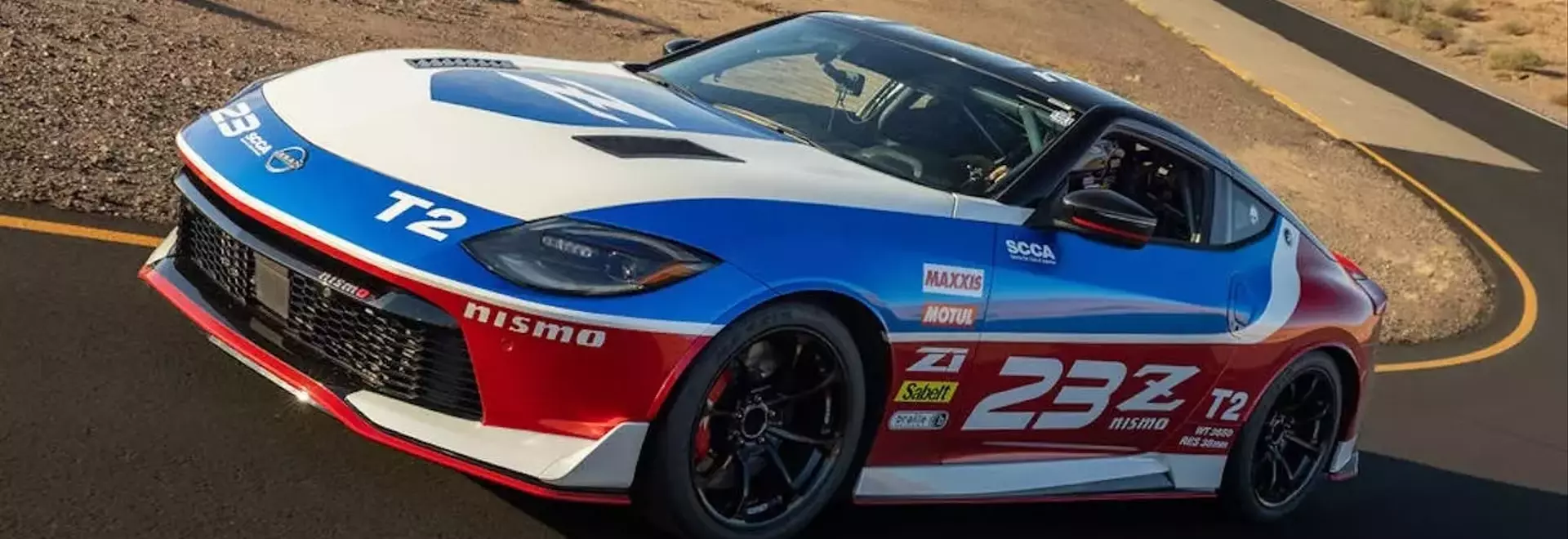
In a remarkable display of engineering prowess and passion, a dedicated group of Nissan employees has taken on an ambitious after-hours project: transforming a standard Nissan Z into a formidable SCCA Touring 2 class race car. This initiative, known as "Project NAT2," highlights the ingenuity and commitment within Nissan, creating a vehicle specifically engineered for serious track competition. The modifications span across critical areas, including a comprehensively upgraded powertrain, a finely tuned suspension system, enhanced braking capabilities, and a completely stripped-down, race-focused interior. Adorned with a custom racing livery that pays homage to Nissan's storied motorsports heritage, this Z is poised to make a significant statement at the upcoming 2026 SEMA Show, demonstrating the extraordinary potential of the Z platform when pushed to its limits by those who know it best.
Nissan Z Transformed: Project NAT2 Prepares for SEMA Show Debut
In a compelling narrative of passion meeting precision, a dedicated cohort of Nissan employees, operating under the moniker Nissan Acceleration Team (NAT), has meticulously crafted a Nissan Z into a formidable SCCA Touring 2 race car. This remarkable endeavor, christened “Project NAT2,” unfolded in the after-hours, a testament to the team’s unwavering commitment and love for the brand’s performance heritage. The vehicle is slated for its grand unveiling at the highly anticipated 2026 SEMA Show, promising to captivate enthusiasts and industry insiders alike.
Under the hood, Project NAT2 retains the Z’s robust twin-turbo 3.0-liter V6 engine, now optimized to meet SCCA Touring 2 regulations. This includes the integration of 38-millimeter turbo inlet restrictors, a high-performance NISMO cold-air intake, and a bespoke Z1 Motorsports engine tune, ensuring a harmonious balance between rule compliance and raw power. The exhaust system has been upgraded to a NISMO GT4 single-exit stainless steel configuration, designed for maximum flow and an exhilarating auditory experience. To cope with the rigors of competitive racing, the fuel system has been enhanced, complemented by an extensive suite of cooling solutions: an aluminum radiator, a NISMO heat exchanger, and dedicated oil and differential coolers.
The chassis has received an equally comprehensive overhaul to deliver unparalleled track performance. NISMO coilovers, upper control arms, front and rear sway bars, and adjustable end links work in concert to provide precise handling and stability. SuperPro and Z1 bushings and mounts further refine the suspension and drivetrain, ensuring every input from the driver translates directly to the road. Braking capabilities are significantly boosted at the front with Z1’s Track Big Brake Kit, featuring six-piston calipers and massive 380-millimeter rotors, paired with Hawk DTC-60 pads. The rear retains the stock calipers but is equipped with Hawk pads for balanced stopping power. The car rides on aggressive 18x11-inch forged NISMO wheels, derived from the GT4 program, wrapped in sticky 275-section Maxxis RC-1 competition tires on all four corners.
Aesthetically, Project NAT2 commands attention with a custom racing livery meticulously designed by NISMO Design Japan. This visual masterpiece pays homage to Nissan’s legendary racing past, evoking a sense of nostalgia while maintaining a distinctly modern edge. The expert application of the wrap by Flying Lizard Motorsports ensures a flawless finish. Functional aerodynamic enhancements, such as Trackspec hood louvers, contribute to improved cooling and downforce. Inside, the cabin has been transformed into a pure racing cockpit. All non-essential components, including carpets, sound deadening, trim, HVAC, and audio systems, have been removed to minimize weight. Even the door panels have been trimmed, and the windows replaced with lightweight alternatives. Safety is paramount, with an SCCA-specification roll cage, a Sabelt full-halo racing seat, a six-point harness, window and center nets, and a Lifeline fire suppression system. Driver controls are optimized with a Sabelt flat-bottom steering wheel, a quick-release system, and paddle shifters. A custom dash, lightweight aluminum floor tray, and an AiM lap timer with data logger provide crucial real-time information, while a cockpit camera captures every thrilling moment on track.
Project NAT2 stands as a testament to the passionate spirit and technical expertise thriving within Nissan. It is not intended for production or sale but serves as a powerful showcase of what can be achieved when dedicated individuals blend factory components with high-performance aftermarket parts. Its debut at the 2026 SEMA Show, alongside other Nissan performance projects like the Sentra SE-R Spec-V, will undoubtedly inspire and reinforce Nissan's enduring legacy in the world of motorsports.
This initiative profoundly demonstrates the power of grassroots innovation and passion within a corporate structure. It's inspiring to see how Nissan fosters an environment where employees can channel their personal enthusiasm for performance into creating something truly exceptional. Project NAT2 is more than just a race car; it's a symbol of dedication, teamwork, and the enduring spirit of automotive engineering, reminding us that the heart of motorsports often beats strongest in the hands of enthusiasts working beyond their official duties.