Stephen Chow's Advice to Japanese Cinema and K2 Pictures' Vision for Global Film Production
During the Taiwan Creative Content Fest in Taipei, K2 Pictures founder Kii Muneyuki shared an intriguing anecdote about acclaimed Hong Kong filmmaker Stephen Chow. Chow reportedly advised Japanese filmmakers to cease emulating kung fu action and instead cultivate action cinema rooted in their indigenous martial arts traditions such as karate, judo, jujitsu, and kendo. This counsel resonates with Kii Muneyuki, who advocates for uniquely Japanese cultural narratives, citing Netflix’s sumo drama “Sanctuary” as an exemplary production.
Kii Muneyuki's K2P Film Fund I, notably the financial force behind Hirokazu Kore-eda's acclaimed film "Look Back," is contemplating expanding its investment opportunities. The fund successfully closed its initial $33 million equity round in February, but the subsequent interest from numerous companies has prompted discussions about potentially reopening the round, contingent on the approval of current investors. The fund currently boasts approximately 30 corporate investors, with MUFG Bank leading the consortium, alongside other notable entities such as Bandai, Dentsu, the Development Bank of Japan, Tokyu Land, and Mori Trust. Kii Muneyuki, serving as the fund’s general partner, has meticulously structured the financing by supplementing equity with an accumulating $67 million in loans, culminating in a projected total of $100 million aimed at funding 50 films over a seven-year span.
Kii Muneyuki also delved into K2 Pictures' innovative "Japan plus one" strategy, which strategically pairs Japanese productions with a specific international market. He articulated that audience preferences for Japanese content vary significantly across different regions—American, French, Taiwanese, and Korean audiences each have distinct tastes, and even the Japanese audience has its own unique perspective. This nuanced understanding drives K2's distribution model, aiming for targeted global reach rather than a one-size-fits-all approach.
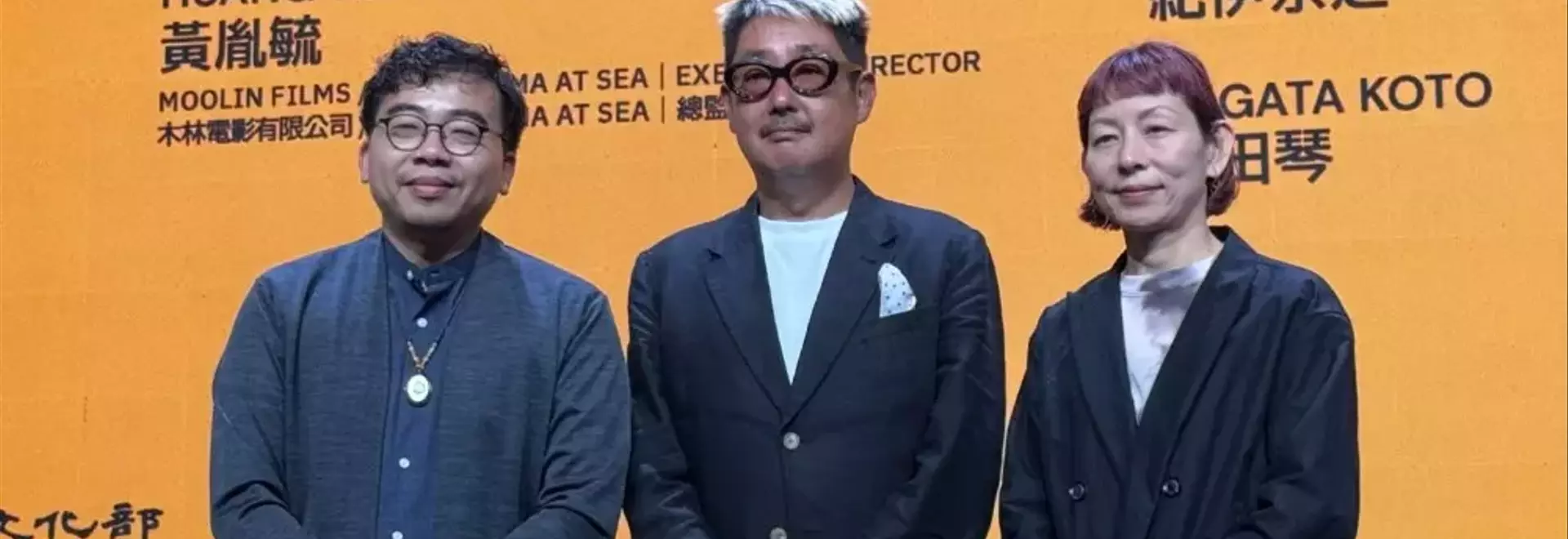
Another significant project highlighted was director Nagata Koto’s Fukushima-centric noir film, “The Nuke Crab,” which K2 Pictures announced at Cannes. Kii Muneyuki expressed his vision for this film to achieve success not only in Japan but also in Eastern European markets like Poland and Ukraine. He believes audiences in these regions, having experienced the Chernobyl disaster, would find a profound connection with the film’s themes. This project, currently in development with filming slated for the upcoming year, addresses socially sensitive topics in Japan that major television networks and studios typically avoid. Nagata Koto emphasized the importance of securing early international sales to facilitate simultaneous global and Japanese releases, highlighting universal emotions such as friendship, family, jealousy, and love as bridges that can connect diverse audiences to unfamiliar narratives.
K2 Pictures was established to offer an alternative to Japan’s traditional production committee system, which generally prioritizes the domestic market and tends to exclude foreign investment, thereby limiting creators’ share of profits. Kii Muneyuki, drawing from his extensive experience in the film industry, noted that K2’s profit-sharing model allocates 70% of earnings to investors and 30% to the creative talent on a per-title basis, acknowledging that a film’s existence is fundamentally driven by the creativity of its makers. The company has successfully completed six films this year, including Kore-eda’s live-action adaptation of Fujimoto Tatsuki’s manga “Look Back,” which premiered in Venice, and Son Myung-ah’s debut feature “Trophy,” set for release in Korea. While K2 aims for six to seven releases annually, Kii admitted that maintaining this pace has been challenging.
To bolster its global presence and enhance the value of Japanese cinema abroad, K2 Pictures has established offices in Taiwan and Korea, intending to directly distribute its films in these markets. Kii Muneyuki critiqued Japan’s prevailing strategy of relying almost entirely on licensing deals for overseas film business, arguing that direct promotion by Japanese professionals in foreign markets is crucial for elevating the international standing of Japanese titles. The greenlighting process at K2 is decentralized, with its six or seven producers, including Kii himself, empowered to champion projects, provided that projected costs can be offset by anticipated revenues. Kii acknowledges the inherent unpredictability of box office success, applying this pragmatic approach to both arthouse and commercial ventures, emphasizing that productions should be scaled to their realistic financial potential. This philosophy also extends to supporting first-time directors, where K2 endeavors to secure pre-sales, streaming rights, and sponsorships to mitigate financial risks, ensuring that emerging talents have the opportunity to make subsequent films. Kii Muneyuki expressed his ambition to continually launch new directors from K2 Pictures, hoping they will remember the company's support as their careers advance.
Furthermore, Kii Muneyuki is driven by a broader vision to enact legislative change in Japan’s film industry. Drawing parallels to the real estate sector, where assets can be securitized through investment trust laws, he argues that similar legal frameworks are needed for content creation. Despite Japan’s investment trust law enacted around 2000 for real estate, it does not encompass creative content. Kii has engaged in discussions with legal experts to advocate for the establishment of such a law, believing it would further professionalize and financially strengthen the film business in Japan. The session where these insights were shared was moderated by filmmaker Huang Yin-yu Kou of Taiwan’s Moolin Films, also the founder of the Cinema at Sea – Okinawa Pan-Pacific International Film Festival.