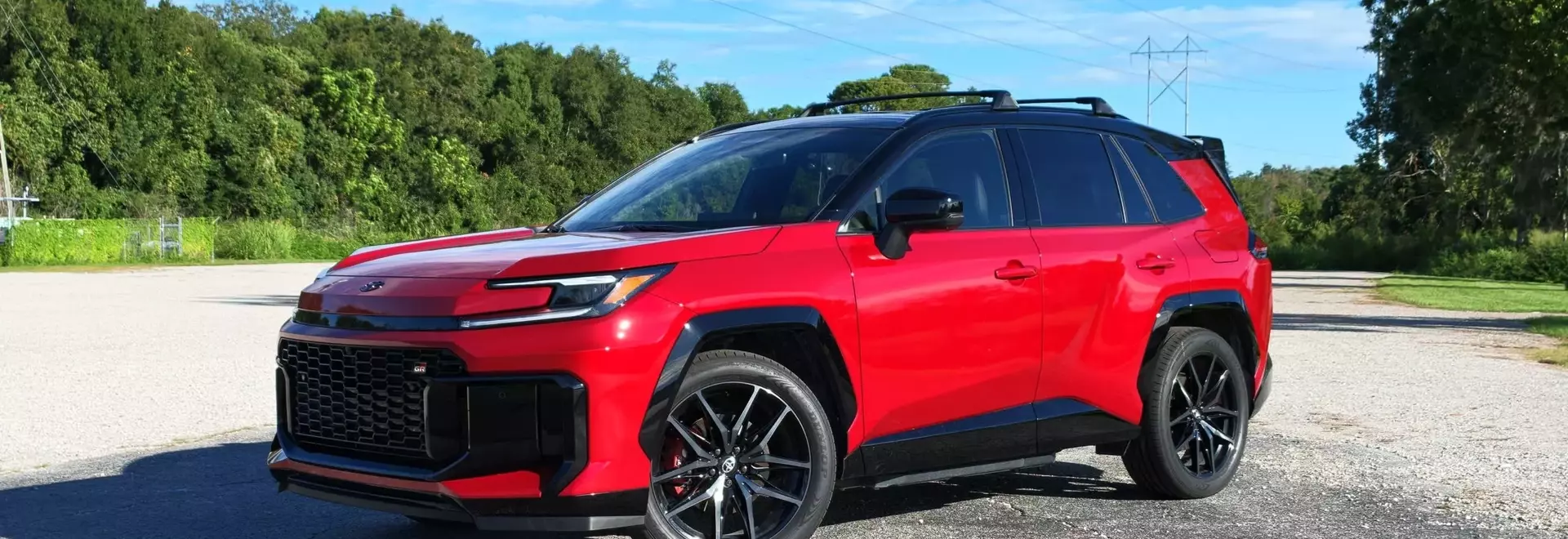
Toyota RAV4 vs. Mazda CX-5: A Comprehensive Powertrain Comparison
In the highly competitive compact crossover market, the recently redesigned 2026 Toyota RAV4 and Mazda CX-5 showcase remarkably different engineering philosophies, particularly concerning their powertrains. These models, consistently top sellers for their respective brands in the U.S., reflect unique strategies in their engine, drivetrain, and transmission choices. A closer look at these distinctions reveals how each manufacturer approaches performance, efficiency, and driving experience.
A primary divergence lies in their engine offerings: the Toyota RAV4 is exclusively available with hybrid or plug-in hybrid options, providing a notable advantage in both acceleration and fuel economy. For instance, the RAV4 PHEV can reach 60 mph in a swift 5.2 seconds, significantly outperforming the CX-5's 8 seconds. Conversely, the Mazda CX-5 currently offers only a naturally aspirated engine, with a hybrid variant not expected until 2027. Mazda’s approach emphasizes a traditional, non-turbocharged setup, which may appeal to buyers prioritizing mechanical simplicity and potentially lower long-term maintenance needs, despite Toyota’s established reliability in hybrid systems. In terms of fuel efficiency, the RAV4's hybridization delivers impressive EPA ratings, far surpassing the CX-5's, offering an extended range and the added benefit of electric-only driving for the PHEV model.
Further differences are evident in their all-wheel-drive systems and transmissions. Toyota's RAV4 employs an electronic on-demand AWD system, utilizing a dedicated rear electric motor, which eliminates the need for a conventional driveshaft and provides instant torque when extra traction is required. This system primarily operates as front-wheel-drive, switching to AWD automatically as needed, and buyers can also opt for a more affordable and efficient front-wheel-drive only version. Mazda's CX-5, on the other hand, features a more traditional mechanical i-Activ AWD system, paired with G-Vectoring Control Plus for enhanced traction and handling. Regarding transmissions, the RAV4 utilizes an electronically-controlled continuously variable transmission (e-CVT) known for its smooth operation and reliability due to its planetary gearset design. Mazda retains its familiar and praised six-speed torque converter automatic transmission, prioritizing a responsive and natural driving feel over a higher gear count or CVT technology, a choice that has resonated well with enthusiasts and reviewers.
Ultimately, the choices between the 2026 Toyota RAV4 and Mazda CX-5 highlight a broader industry trend where innovation and tradition coexist. Toyota's commitment to advanced hybrid technology offers a compelling package of efficiency and performance, positioning it as a forward-thinking choice for environmentally conscious drivers seeking cutting-edge solutions. Mazda's dedication to a more conventional, driver-centric mechanical design provides a refined and engaging experience, appealing to those who appreciate proven engineering and tactile feedback. Both vehicles cater to different preferences within the compact SUV segment, underscoring the dynamic landscape of modern automotive design and consumer priorities.